Adapting a methodology (such as HITT-Q) is not just a matter of translation, but a full-fledged process of interlingual, intercultural, and psychometric validation.
After receiving written consent from the authors for the translation, adaptation, and use of the methodology, and approval by the Ethics Committee of the KIMPP, the direct translation of the methodology was performed by independent translators—professional linguists from two different translation agencies. A single version was agreed upon during the joint work. After that, another translator from a third agency translated the text back into the original language. This helped to identify any distortions or inaccuracies in meaning.
Next, a focus group of psychologists/psychotherapists (N=15) was created to examine the adequacy of the wording, unambiguous interpretation, and conceptual, semantic, and cultural appropriateness. The semantics of each item were checked to ensure that the meaning was not distorted. The translation was then finalized.
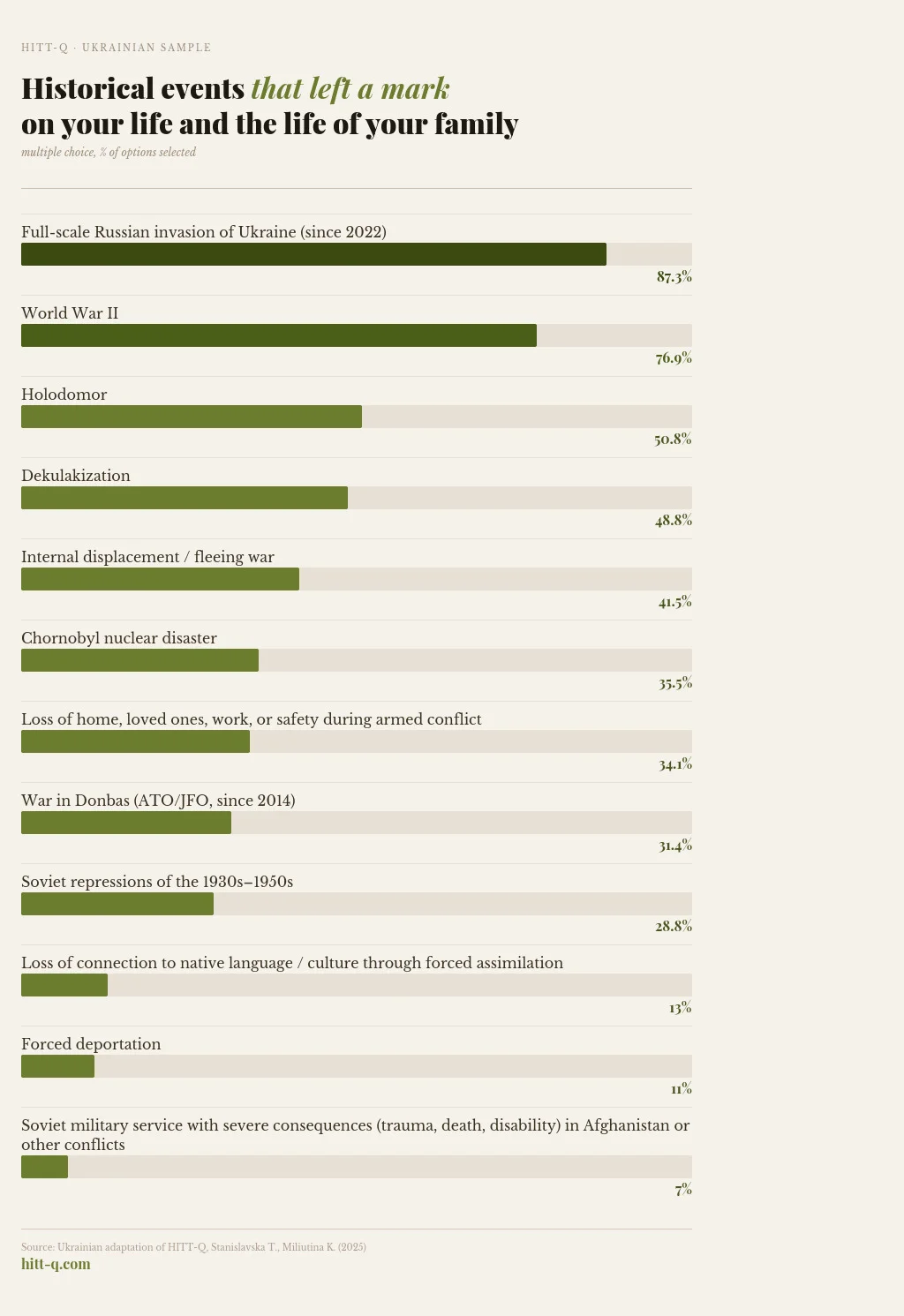
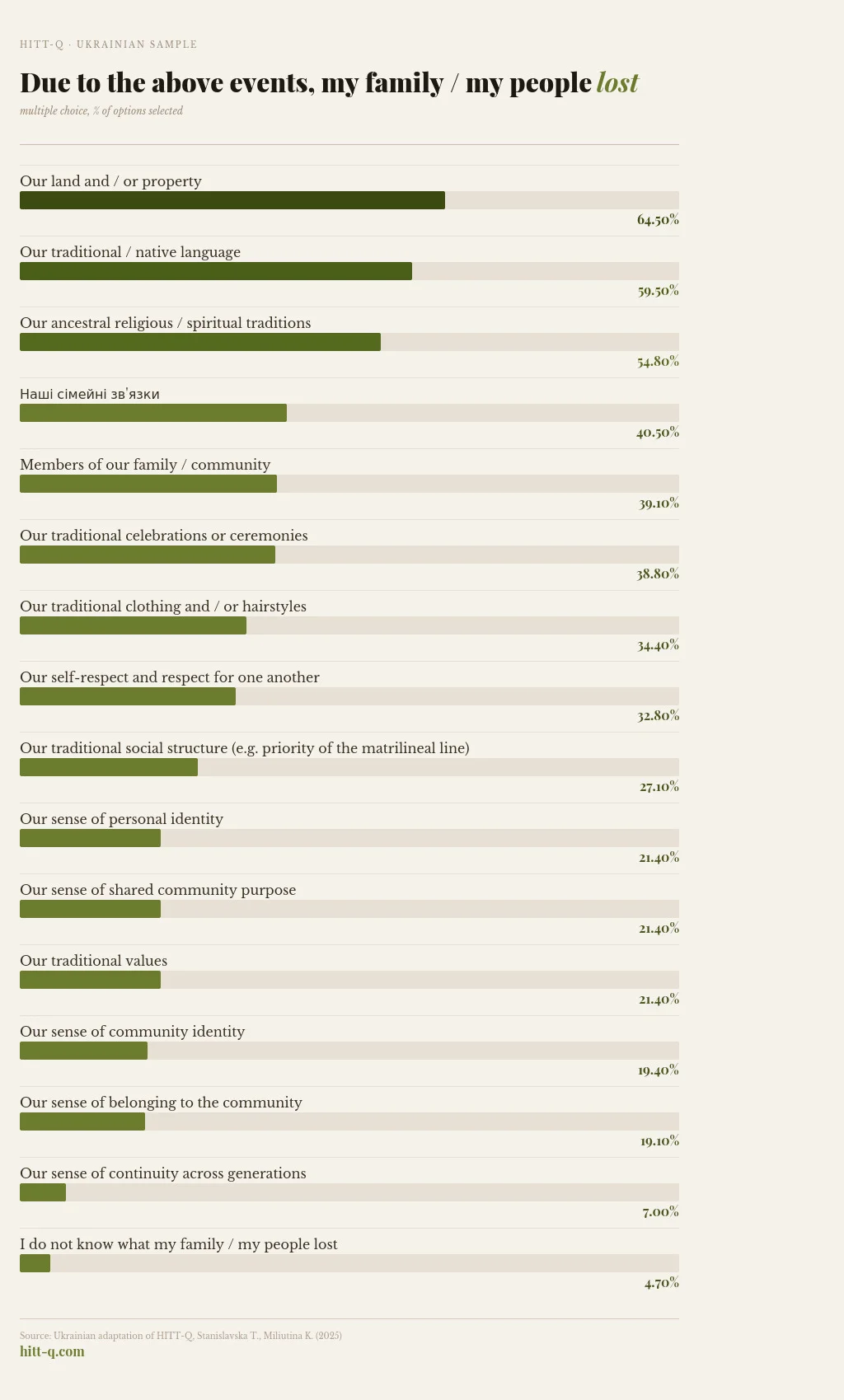
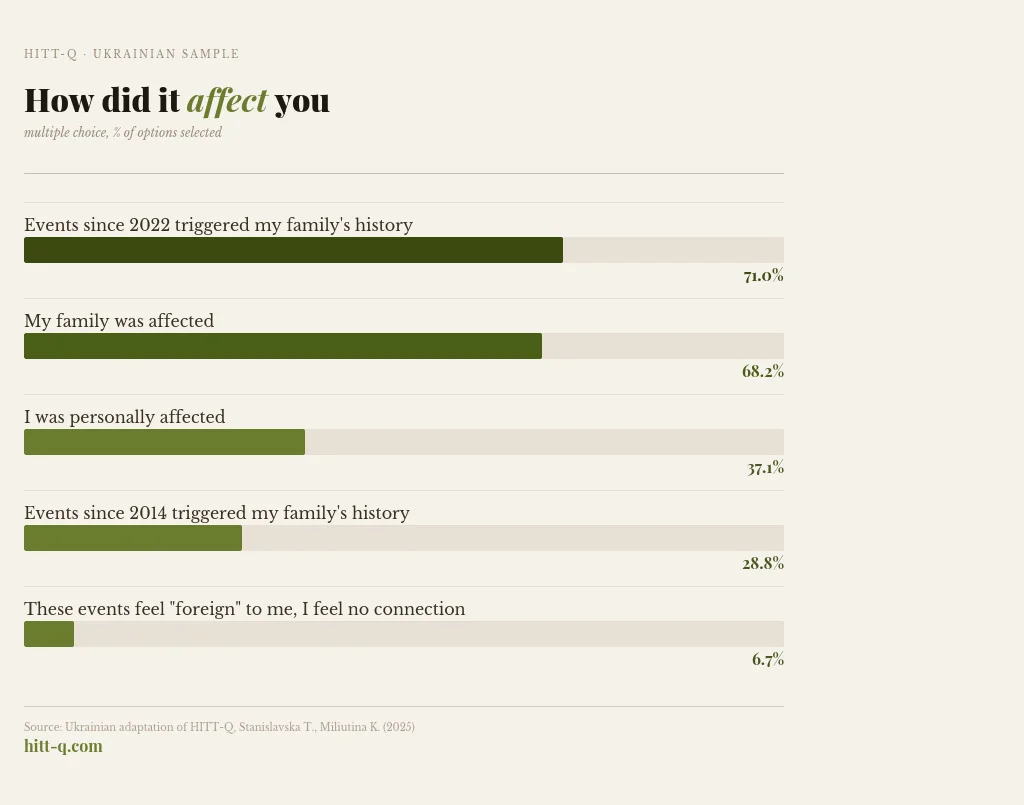
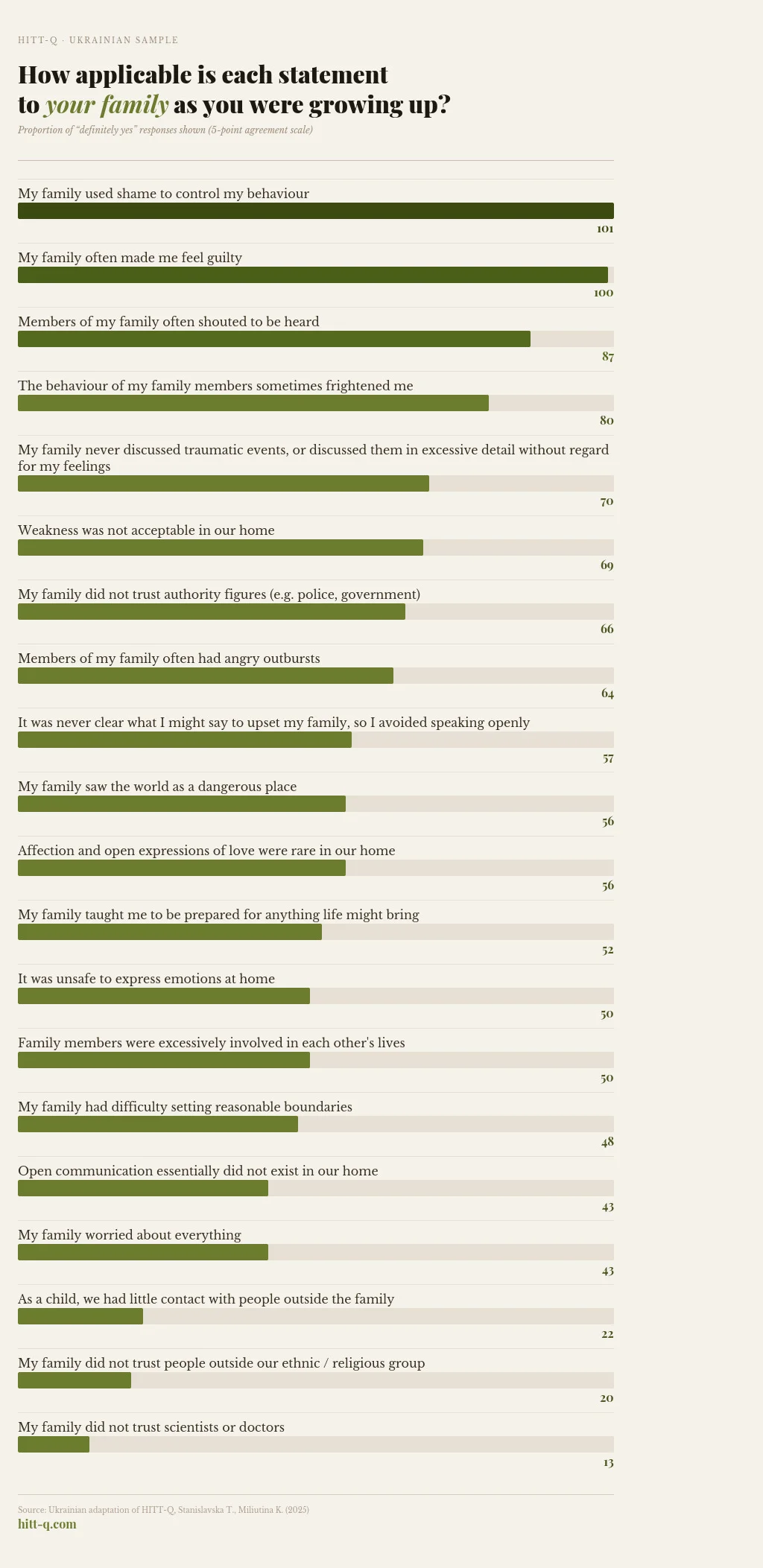
The original version of the HITT-Q methodology was created for the descendants of Holocaust victims. Therefore, it was adapted to the Ukrainian context and historical events that left their mark on the personal lives of Ukrainians and their families. The first section of the questionnaire, “EVENTS,” was modified to reflect historical facts specific to the Ukrainian population. The question “How did this affect you?” was also added. All other sections and questions of the questionnaire remained unchanged, preserving the original structure and psychometric properties of the methodology.
In the next stage, the methodology underwent field testing: a Google form was created and online testing was conducted (N=299). After three weeks, a retest was conducted using the same questionnaire items (N=142).